How an emission credit service provider like Voltico turns EV charging into revenue

Sten · Expansion Lead
Our smart software helps companies turn EV charging into revenue by claiming emission credits (EREs) as a managed service.
Contents
- The system changed in 2026
- From HBEs to EREs
- Sector-specific obligations
- What is an emission credit service provider?
- What is the threshold for claiming EREs?
- What is the role of the NEa?
- Voltico as emission credit service provider: a trusted partner in the energy transition
- End-to-end solution with automated software
- What Voltico does for you here
With the introduction of the revised European Renewable Energy Directive (RED III), more companies than ever can generate income from electric charging sessions. In this article, we share our perspective on what this change means and how we support companies and organizations in capturing this value.
The system changed in 2026
As of 2026, the Dutch system for renewable energy units has fundamentally changed. HBEs have been replaced by EREs, a new system based on actual CO₂-impact. This shift creates new opportunities, but also introduces some complex obligations.
In this article, we explain what the transition from HBEs to EREs means, what happens to remaining HBE balances from 2025, and how organizations can prepare to avoid leaving value untapped. We also explain how charging credits can be monetized from 2026 onward without adding administrative burden.
From HBEs to EREs
Since 1 January 2026, the system of renewable energy units (HBEs) has been replaced by emission credits (EREs). While HBEs represented a volume of renewable energy, EREs reflect the actual CO₂ reduction achieved. This change follows the implementation of the European Renewable Energy Directive (RED3), which focuses on reducing lifecycle emissions compared to fossil fuels.
As a result, the calculation of credits from electric charging has changed. The fixed multiplication factor of four for electricity no longer applies. EREs are now directly linked to avoided CO₂ emissions compared to fossil energy. This means that credits are tied directly to the climate impact of the registered electricity. In practice, however, the incentive per charged kilowatt-hour for transport remains broadly comparable to the former HBE system.
Any eligible saved HBE-Other (HBE-O) units from 2025 are automatically converted after year-end into a starting balance of ERE-Other. The conversion factor for 2025 has been set at 46, meaning that one saved HBE-O results in 46 ERE-O.
Sector-specific obligations
Another major change is the introduction of sector-specific obligations for fuel suppliers. The system now operates explicitly by transport sector: road transport, inland shipping, maritime shipping, and aviation.
Each sector has its own reduction target and sector-specific EREs, although aviation does not yet have a binding obligation. Trading between sectors is restricted: the road transport sector can no longer use EREs from other sectors, and electricity-based EREs are not tradable across sectors at all. As a result, demand for EREs within the road transport sector is expected to rise, which may positively influence price development.
What is an emission credit service provider?
One of the most impactful changes is the introduction of the emission credit service provider (inboekdienstverlener in Dutch). These providers can take over the complex tasks of metering, administration, verification, booking, and trading of EREs. This is especially valuable for smaller companies and even private charge-point owners, for whom administrative requirements and verification costs previously posed a significant barrier.
Voltico is known as an emission credit service provider with the Dutch Emission Authority (NEa) and is authorized to register electricity on behalf of third parties in the Energy for Transport Register (REV).
What is the threshold for claiming EREs?
From 2026 onward, a threshold applies for claiming ERE emission credits. Companies with charging infrastructure that want to book less than 2 million kWh of electricity per year for transport must use an emission credit service provider. Companies above this threshold may retain their own account with the NEa, but can still opt to use an emission credit service provider. Organizations that supply electricity alongside other forms of renewable energy are exempt from this threshold.
What is the role of the NEa?
The Dutch Emission Authority (NEa) plays a central role in decarbonizing transport energy in the Netherlands. The NEa advises on policy related to renewable energy in mobility and ensures that the system functions correctly and reliably.
A key responsibility of the NEa is supervising the actual delivery of renewable energy. It verifies whether these deliveries have taken place and whether they meet the applicable sustainability criteria. The NEa also manages the Energy for Transport Registry (“Register Energie voor Vervoer”, REV), in which suppliers record their deliveries. The NEa checks the accuracy of these records and whether companies meet their legal obligations to supply an increasing share of renewable energy and reduce CO2-emissions.
In addition to supervision, the NEa acts as an enforcement authority. If inspections reveal non-compliance, it can impose sanctions or fines. This safeguards the integrity of the system and ensures a fair and effective energy transition in the transport sector.
Under the ERE framework, annual verification is mandatory. Companies must demonstrate that the booked kilowatt-hours, sourced from the grid and or from on-site generation, deviate by no more than 2% from actual consumption. Larger deviations may result in EREss being rejected, corrected, or not paid out. This creates a direct financial and operational risk for the credit service provider and its clients. The choice of service provider is therefore what determines that financial risk directly. Only parties with scalable, auditable processes and reliable software can consistently meet these requirements and protect clients from risk.
Voltico as emission credit service provider: a trusted partner in the energy transition
The transition to EREs and the introduction of sector-specific obligations can increase complexity, requiring more expertise and capacity from organizations. We understand these challenges and take the whole process off your hands, so you don't have to handle any of it yourself.
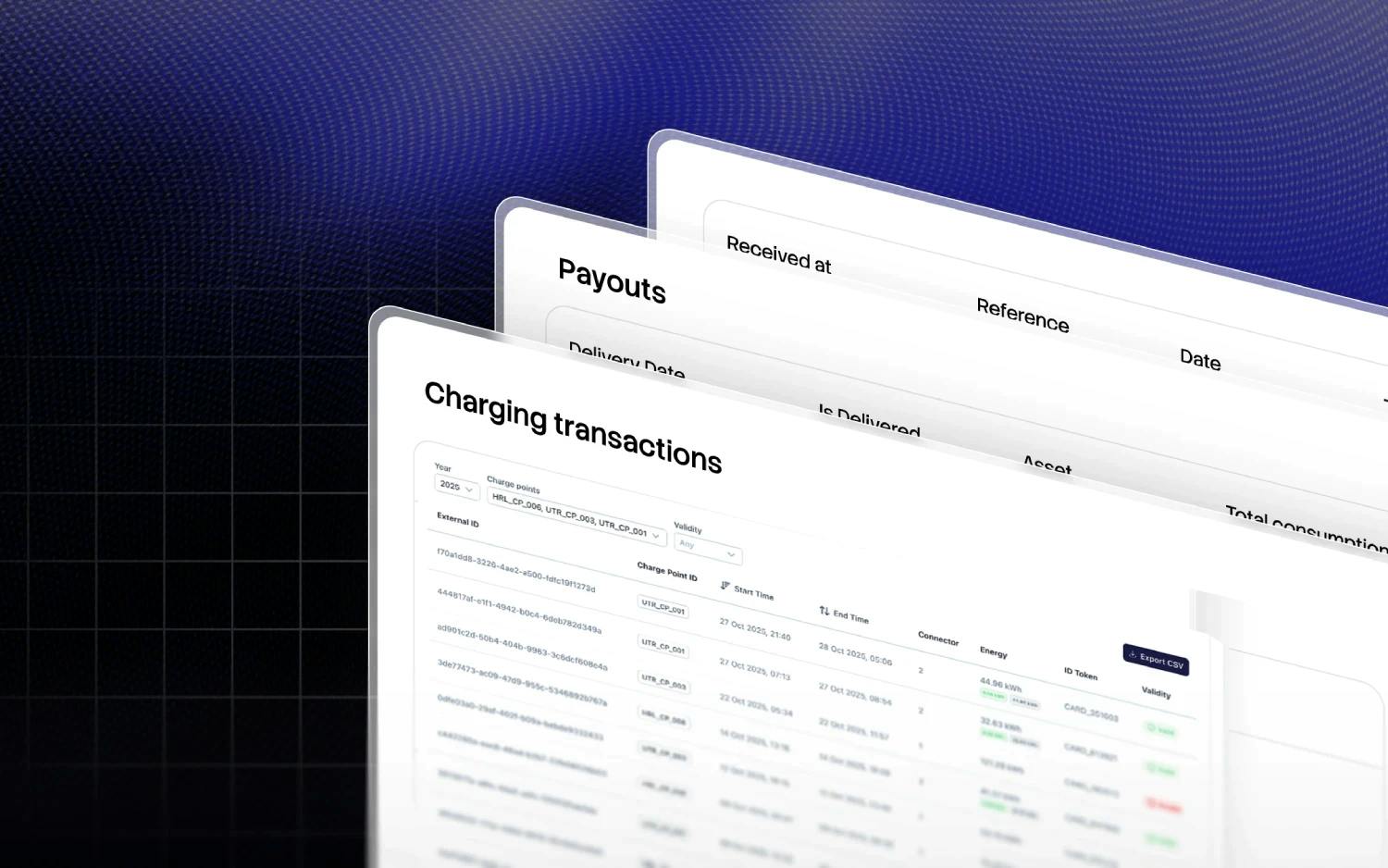
Voltico takes full responsibility for the entire ERE process as an emission credit service provider (inboekdienstverlener). We offer compliant automation from chargepoint to payout, significantly reducing administrative overhead, and handle booking with the NEa on behalf of our clients.
End-to-end solution with automated software
We offer a end-to-end solution without requiring changes to existing chargers. Our proprietary, automated software platform handles registration, trading and payout. We pay out periodically, because we track your charging data in real time. That gives a stable and predictable cash flow. Our automated approach provides real-time insight into verification processes, which supports efficiency and reliability. By aggregating ERE volumes from multiple clients, we create larger, attractive volumes that can achieve better market pricing per ERE.
What Voltico does for you here
We take registration, verification and payout of your EREs off your hands, without you needing to track the rules yourself. Curious what this means for your organisation? Work it out with our calculation tool.
Want to know what to expect from an emission credit service provider? Read what to look for when choosing one, see how the Voltico platform works or calculate what your chargers could earn.