Webinar: extra income from EREs with your own generation

Susanne · Marketing lead a.i.
Voltico and Enerzien on 100% ERE: why your own solar or wind roughly doubles your EREs, which meters you need, and how it works alongside SDE++ or a battery.
Contents
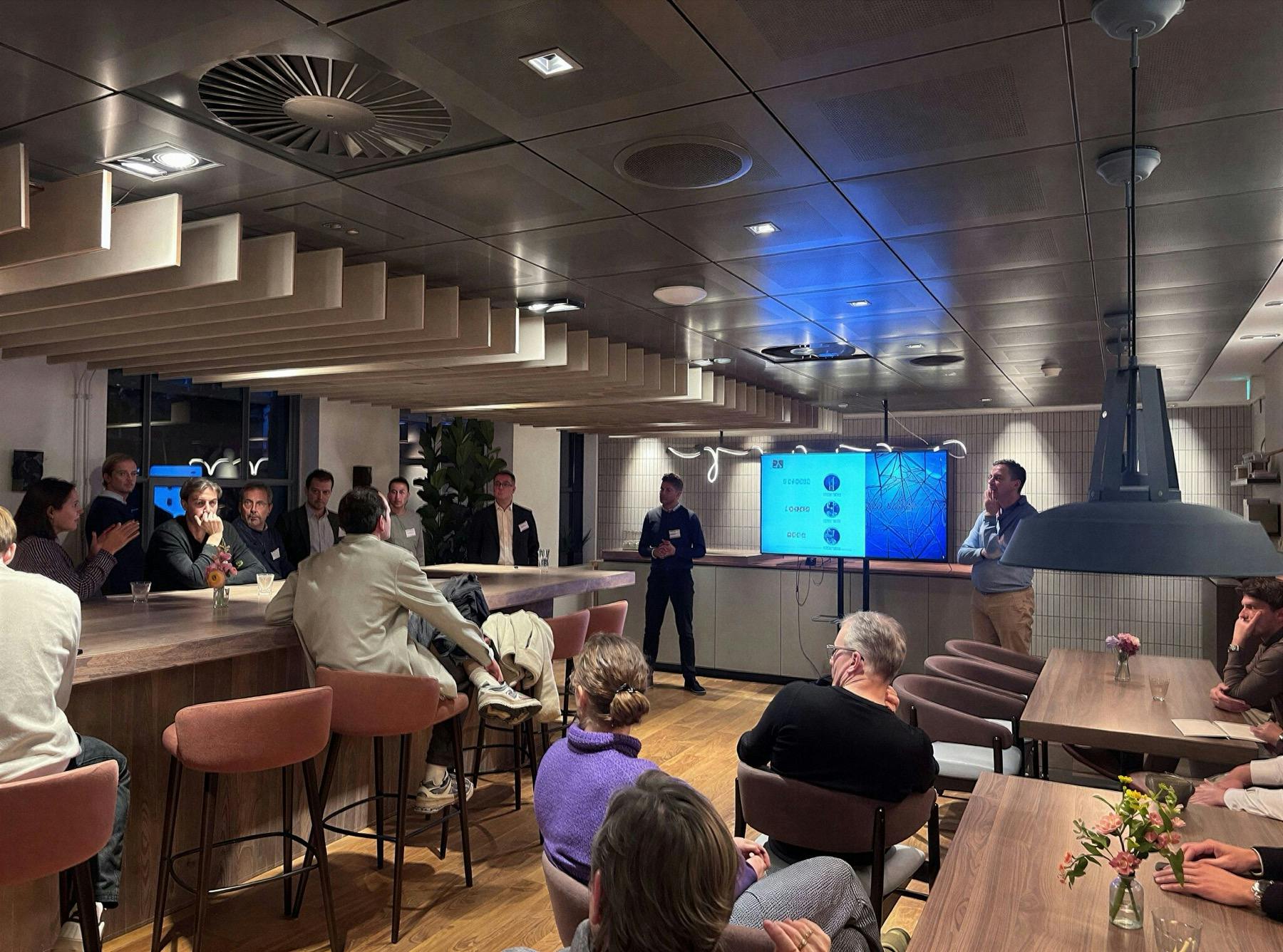
Solar panels or a wind turbine at the same site as your charge points? Then you are probably leaving EREs on the table. In this webinar Sten (Voltico) and the founder of Enerzien, an independent architect of smart energy systems, walk through the rules and the engineering behind them. Voltico from the registration side, Enerzien from the metering and the business case. The recording is in Dutch.
Why does your own generation earn more?
Grid electricity counts at the grid-average renewable share: 50.5% in 2026, set by CBS (Statistics Netherlands). Electricity from your own solar or wind that you charge within the same hour counts at 100%. For that part of your charging volume you get roughly twice as many EREs.
It comes down to simultaneity. Voltico matches your generation against your charging sessions hour by hour. Whatever the sun covers in that hour counts at 100%; the rest we register as grid electricity. The more you charge while the sun shines, the higher your yield.
What do you need for 100% ERE?
- Guarantees of origin (GOs) for non-grid delivery covering the volume you register at 100%. You transfer them to the NEa in the VertiCer registry; they prove the electricity was generated at your own site.
- A gross production meter with a green EAN code on your solar or wind. No meter, no GOs.
- A MID meter inside the charge point, or an exclusively metered secondary allocation point (SAP). Most AC charge points have one; fast chargers often do not.
- Charging data per clock hour. This is where it goes wrong most often: charge points that do not report hourly data. It is a setting in your charge point or back end, but someone has to switch it on.
Allow up to three months for a new gross production meter. You need your metering company and an installer.
What if you have SDE++?
Then the decision year on your RVO letter settles it. Since the 2024 application round SDE++ covers grid delivery only, so you can register at 100%. An older decision rules out the 100% route, even if in practice you received nothing for self-consumption. Registering at 50.5% is always possible.
A large solar roof with an old decision and a small SDE advance? Then setting up your installation differently can pay off. Voltico and Enerzien are happy to run the numbers with you.
Does it work with a battery?
Yes. If your vehicles mostly charge in the evening or at night, as at many e-truck depots, a battery holds on to the daytime solar. The NEa does ask you to show that the stored electricity then actually went to your vehicles. So meter the battery too.
Who is it worth it for?
Meters and administration take time and money. Our rule of thumb: from roughly 100 MWh of charging a year, about half of it simultaneous with your own generation, the extra yield outweighs that. Well below that, keep it simple and register against grid electricity.
Not sure about your situation? Get in touch, or first work out what your charging volume earns with the ERE calculator.