How Crisp gets more out of its electric fleet with EREs

Maarten · CEO & Co-Founder
Crisp has driven partly electric since it was founded. Its COO talks about the business case for electric delivery and extra ERE income through Voltico.
Contents
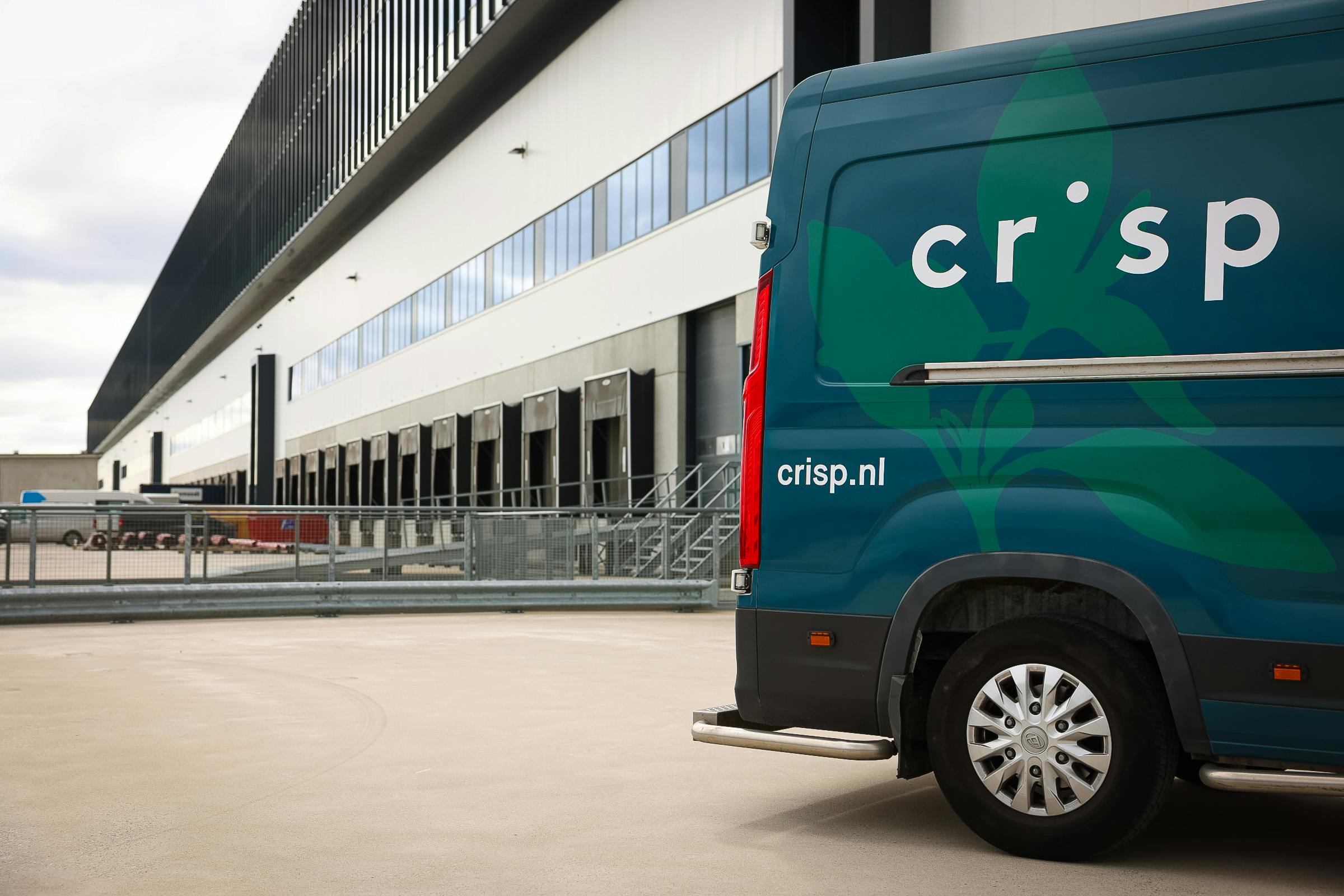
Crisp is an online supermarket that delivers fresh groceries through a short supply chain, seven days a week, to customers across the Netherlands and Flanders. Almost since its launch in 2018, the grocery app has delivered electrically wherever it can. With its own drivers and smart, combined routes, fresh groceries arrive at customers' doors.
More and more of those deliveries are electric. It is a deliberate choice that fits the sustainability ambitions of Crisp, and one that is becoming more attractive financially too. Partly thanks to the income Crisp earns from its charging volume through emission reduction units (EREs), with Voltico.
We spoke with Skander Taieb, COO of Crisp, about electric delivery and why Crisp works with Voltico to register its EREs.

Electric delivery has been part of Crisp's DNA from the start
As a certified B Corp, Crisp works towards a better food system and pursues a sustainable mission. Its products come from hundreds of small-scale makers and are sourced locally and seasonally wherever possible. How the groceries are delivered is a conscious choice as well.
"Our electric fleet is a big part of our mission: making the world a little better and tastier. That's why we set up our last mile to be future-proof from day one. Many companies had to overhaul everything for the zero-emission zones, but for us it made little difference."
Crisp is not fully electric yet, Skander stresses. "Some of our routes are still too long for the range of an electric delivery van, because we serve customers all over the Netherlands and Flanders. But with the economic climate as unpredictable as it is, and diesel prices rising, it's great that a large part of our fleet is already electric."
Sustainability and return: the business case for electric delivery
For Crisp, electrification is not only a sustainability question but also a business decision. Since 1 January 2025, Dutch businesses pay BPM on a new diesel van, a one-off tax at purchase. Electric vans are exempt. "Electric vans have always cost more to buy, but they're cheaper per stop. The more stops you drive, the bigger that advantage."
Extra income from charging volume that's already there
Electric delivery vans need charging every day, and eligible charging sessions can add value through EREs, for the environment and for the business.
Skander explains: "In recent years the government did a lot to encourage the shift to electric transport. That made it worthwhile to turn the environmental gain of the electricity you use into money. But it's quite complicated, with a lot of administration and complex legislation."
Why Crisp deliberately outsources the ERE process
Companies whose charging infrastructure delivers less than 2 million kWh a year must use a registration service provider to register EREs. That applies to Crisp too.
"When Voltico approached us in 2025 and asked whether they could take this off our hands, we achieved a high return with relatively little effort."
Beyond the return, the partnership means the ERE process takes no unnecessary time or capacity from the organisation, and Crisp doesn't have to build the specialist knowledge, software and processes itself.
"With EREs you get a kind of discount on your energy costs. We can invest that money back into our customers and better service. And Voltico took everything off our hands, from data collection and validation to registration, trading and payout. The process was efficient and fast, and the fully automated fintech software was transparent and reliable."
Crisp's advice to other fleets
For companies that drive electric, or want to, EREs are an interesting addition to the business case.
"It's extra return that nine times out of ten you don't count on. Great that it's possible, and even better when an experienced partner can take it off your hands. Then you can spend your time and attention on building the core business."
Get more out of your electric fleet too
Does your company drive electric as well? Use our ERE calculator to see what your charging volume could earn, or take the quickscan to check whether your charge points qualify.