Insights
Turning your EV charging infrastructure into income: 3 key lessons from our webinar on EREs

More and more companies are investing in electric vehicles and charging infrastructure. But did you know that this investment can also generate a direct revenue stream through emission reduction units (EREs)?
In a recent webinar, Geert Hoekzema and Alex Loos from ELIX and Maarten Poot, our co-founder, walked participants through everything a business needs to know to benefit from this system.
ELIX and Voltico work in close collaboration to provide clients with a single point of contact for their complete charging and EV registration entitlement (ERE) strategy. ELIX contributes expertise in charging locations and kWh pricing, while Voltico covers the ERE market and its administration. Together, we ensure an optimal outcome, without the client having to navigate two separate worlds.
These are the three key takeaways from this webinar.
Takeaway 1: EREs are already valuable today and the potential goes even further
EREs are tradeable emission certificates rooted in European climate policy (the Renewable Energy Directive III), designed to reduce CO₂ emissions in the transport sector. Transport accounts for approximately 25% of CO₂ emissions across Europe, and EREs are the market mechanism in the Netherlands to accelerate that transition.
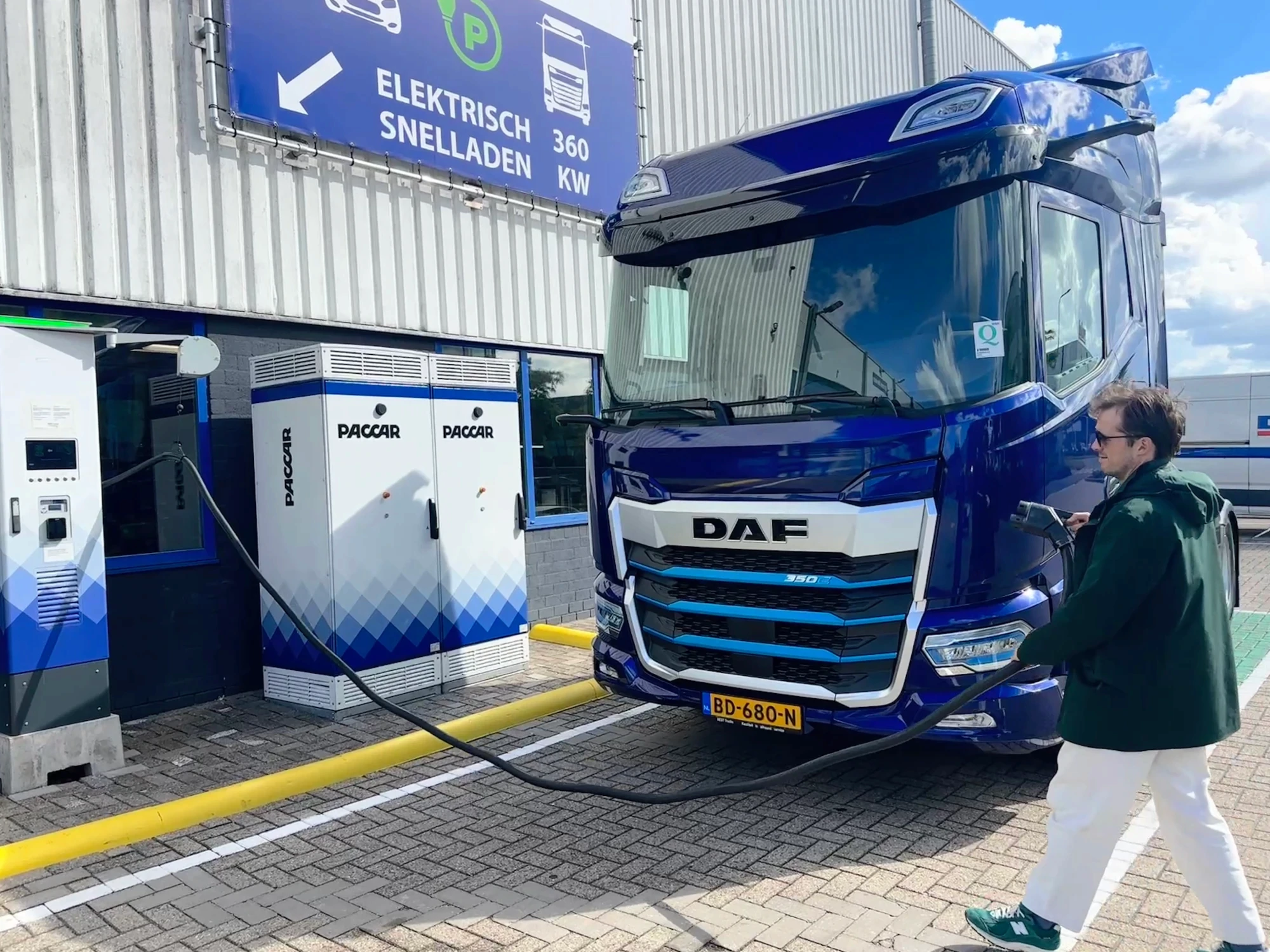
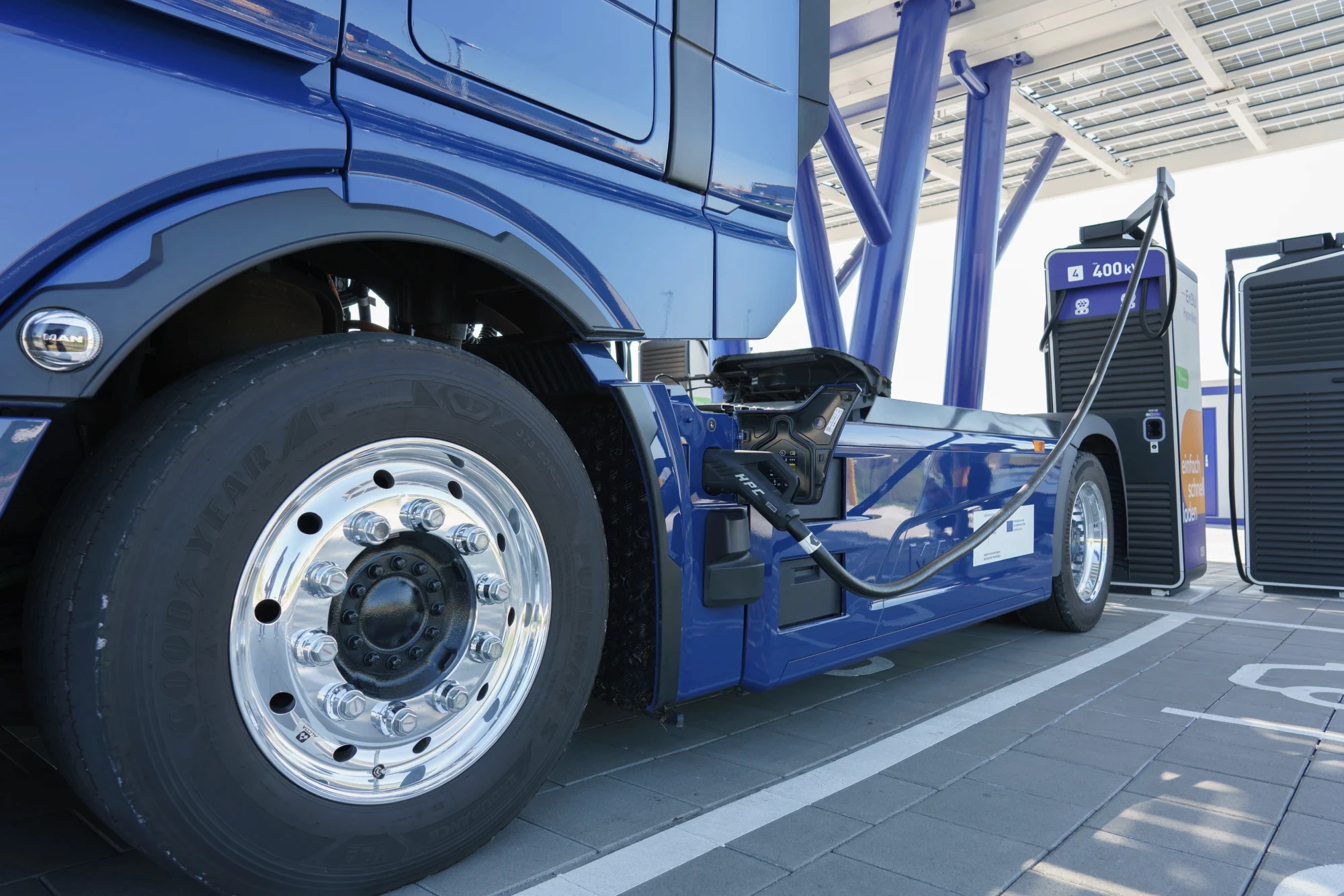
At present, one ERE represents roughly €0.10 per charged kWh. That may sound modest, but for a transport company operating four electric trucks — each consuming around 400 kWh per charging session across 300 days a year — that already adds up to nearly €50,000 per year.
And there is more to gain. Companies with their own solar energy generation and the right metering in place can demonstrate that their electricity is fully renewable. In that case, the value can rise to around €0.20 per kWh, a doubling. The key requirements are a so-called gross production meter on the solar installation and an administration that shows how much green electricity is used for charging. In practice, figures of €18,000 to €20,000 per truck per year are cited as a realistic range when optimized.
One important note: the ERE price is market-driven and comes with no absolute guarantee. That said, the system offers policy certainty until at least 2030, with an extension to 2035 under discussion in the Netherlands and already confirmed until 2040 in Germany.
Takeaway 2: Accurate data and metering are the absolute foundation
Claiming EREs starts with one thing: reliable charging data. Without an accurate record of how many kWh were charged and when, there is nothing to register.
In practice, this means:
MID meter per charging point Charging stations should preferably be equipped with a MID meter — a calibrated, certified measuring device. For AC chargers, this is often included as standard. For DC fast chargers, that is not always the case, so this is something to explicitly verify when purchasing or installing equipment.
Alternative: SAP configuration If your charging site lacks certified meters per individual charging point, a secondary allocation point (SAP) with a single overarching certified meter is a viable alternative. This allows you to accurately record the total charging volume across the site.
Grid connection ownership ERE payouts go to the owner of the grid connection — or a party that has been formally authorized by that owner. In leased properties, this can create friction between the logistics operator and the property owner. It is important to address this early in the process.
Annual verification An independent audit takes place every year. If the administration shows a discrepancy of more than 2%, a registration can be rejected. Voltico and ELIX run real-time checks to minimize this risk.
Takeaway 3: For most companies, registering through a specialized service provider is the smartest move
Self-registration with the Emissions Authority is only permitted from a charging volume of at least approximately 2 million kWh per year. For most companies, including larger transport operators, that is not a realistic threshold in the early stages.
By working with an emission credit service provider, companies with smaller volumes can still benefit. The model works on a no cure, no pay basis: there are no upfront costs, only a commission on realized ERE revenues. Validation and verification costs are included.
An added benefit: pooling volumes can be advantageous for the trading price of EREs. Larger bundles attract stronger buyers, typically fuel suppliers who are legally required to meet blending obligations.
Getting started: where do you begin if you want to claim EREs?
Based on the webinar, these are the concrete steps to get started:
Audit your metering: do all charging points have a certified MID meter? If not, assess whether a SAP configuration is needed.
Establish grid connection ownership:
For large consumers: who is listed in the CAR (Central Connection Register) and who pays the grid costs?
For small consumers: which party is named in the energy contract?
Map your charging volumes: how many kWh do you charge per year? This determines whether working with a registration service provider makes sense and which pricing tier applies.
Consider on-site energy generation: do you have solar? If so, make sure you have a gross production meter in place and verify that you are not making a duplicate claim under other schemes (SDE/GVO).
Explore battery storage for optimization: charge daytime solar output into a battery and use it overnight for your vehicles. This increases the share of renewable electricity used for charging and raises the ERE value accordingly.
Want to know more?
Curious what your charging infrastructure could generate in EREs? Use our ERE calculator or get in touch directly.