Quick answer
What is an ERE service provider?
An ERE service provider registers eligible EV charging sessions, converts charging data into emission credits, manages compliance checks, trades the credits, and pays out the proceeds. Voltico automates this full lifecycle so businesses can earn recurring revenue from charging infrastructure without manual administration.
Common questions about ERE services
Who can earn ERE revenue?
Companies with eligible EV charging infrastructure can generate ERE revenue when charging data can be verified and registered under the applicable emission credit rules.
Does Voltico handle compliance?
Yes. Voltico validates charging data, maintains audit trails, supports registration, and keeps the ERE workflow traceable so customers avoid manual spreadsheets and annual reconciliation work.
How are payouts created?
After eligible credits are verified and traded, Voltico automates settlement and payout reporting, turning charging sessions into a recurring revenue stream.
What does an ERE service provider deliver?
An ERE service provider enables you to generate additional revenue from your EV charging infrastructure by converting charging data into emission credits.
By registering charging sessions and converting them into emission credits, you unlock a new revenue stream from energy that is already being consumed.
How Voltico works as an ERE service provider
An ERE service provider enables you to generate additional revenue from your EV charging infrastructure by converting charging data into emission credits.
By registering charging sessions and converting them into emission credits, you unlock a new revenue stream from energy that is already being consumed.
Connect Voltico
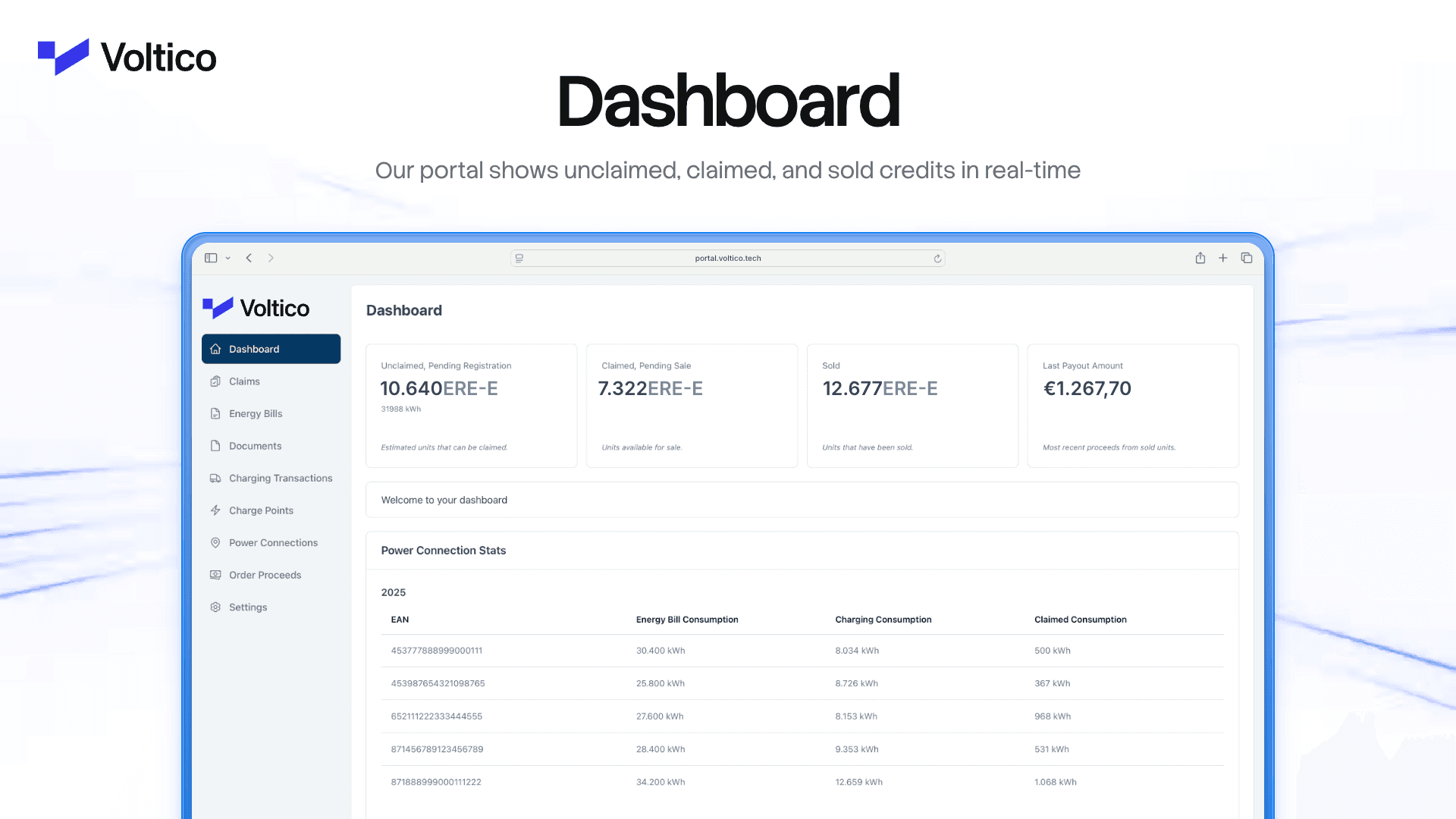
Once all eligible EV chargers are connected to our platform for seamless data exchange, Voltico begins tracking charging sessions in real time. No additional hardware or manual uploads are required.
Using smart batteries or solar panels? Voltico syncs all energy data and organizes every charging session, even if you have multiple charging locations.
Validate charging data
Our system validates and matches charging data with user, charger, and power connections. It checks eligibility, completeness, and timestamp accuracy to ensure full compliance.
Charging sessions must be validated to claim ERE emission credits. With Voltico, you’re always compliant and audit-ready.

Claim credits
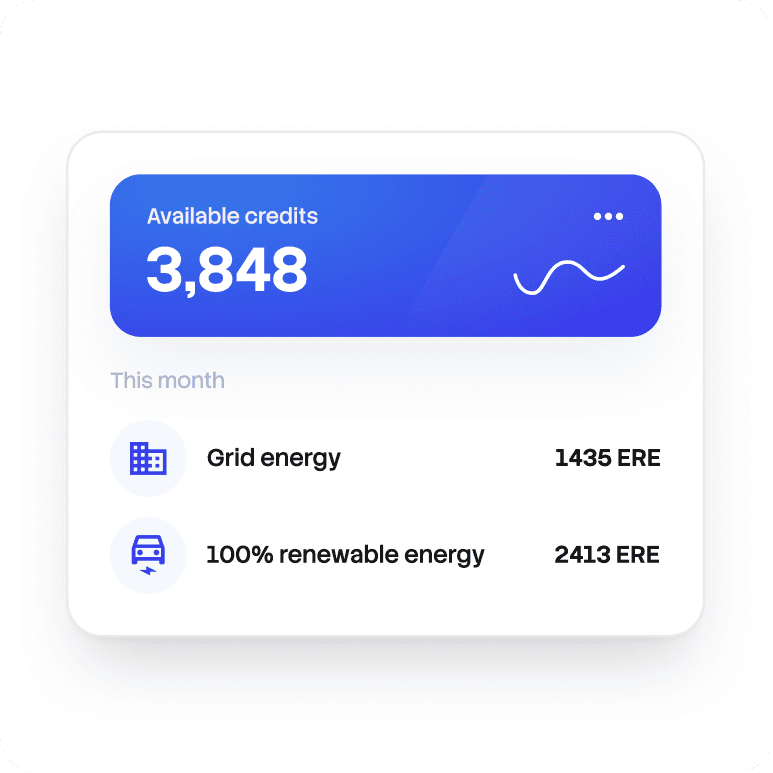
With your validated kWh from charging sessions, we register and claim ERE emission credits with the Nederlandse Emissieautoriteit (NEa). Generating renewable energy on-site? That can double the value of your credits. Earn up to €0.25 per kWh.
Charging EVs with only grid energy? You can still earn ERE emission credits. Voltico guarantees optimal value for every kWh charged.
4
Trade credits
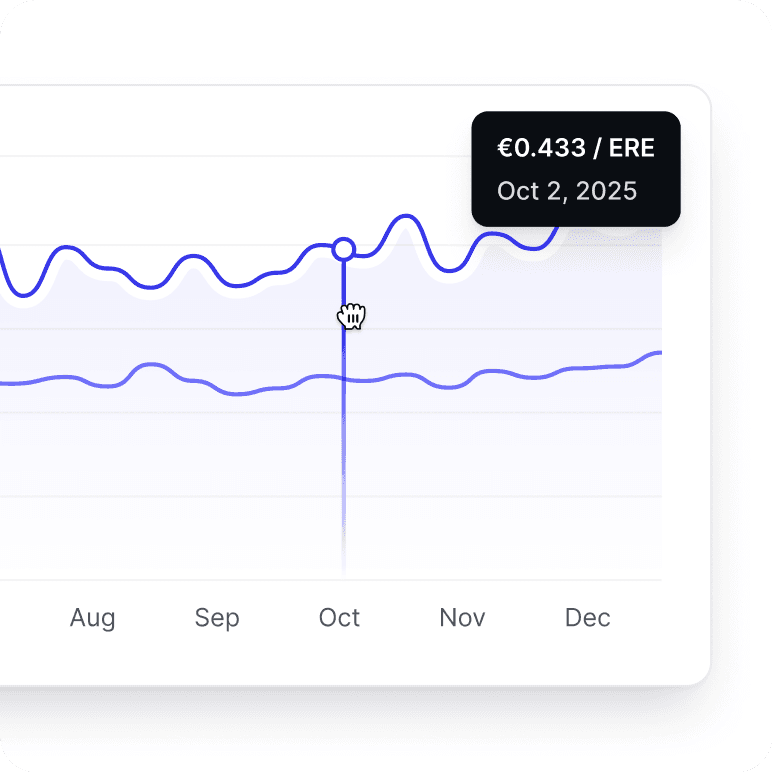
We trade your ERE emission credits through established brokers to secure the best prices and terms. Voltico operates independently from fuel suppliers and always trades through the market to maximize your return.
We always bundle EREs into larger offerings, making them more attractive to buyers and allowing our clients to benefit from economies of scale. For larger charging volumes, we can explore fixed prices with buyers, providing companies with predictable, recurring income
Periodic payouts
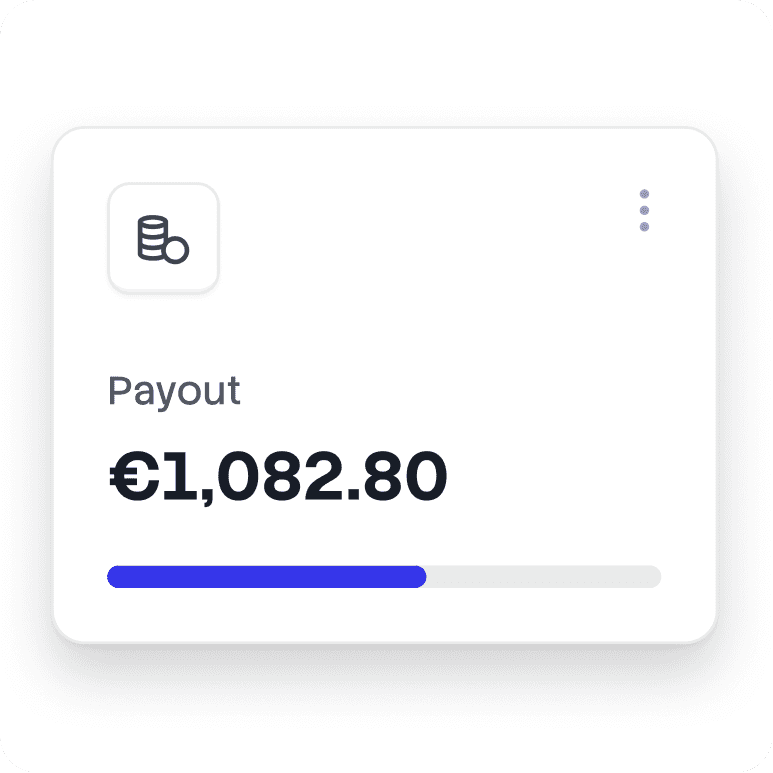
Once your ERE emission credits are traded, earnings are automatically paid out every period, creating a recurring cash flow. A full audit trail is accessible on our platform.
We automatically issue an invoice and transfer the income to your account, eliminating any manual administration on your side.
Not all emission credit service providers are the same. Voltico focuses on simplicity, speed and maximizing revenue.

No forms
Manage your EV charging data effortlessly. No forms to fill out, no uploads needed. A fully automated process.

No annual reconciliation
Forget manual checks. Compliance is handled, so you can focus on your core business.

No manual spreadsheets
Manual data tracking is slow and error-prone. Don’t risk missing out on emission credits with Voltico's transparent data insights.
What is an ERE service provider?
An ERE service provider registers EV charging sessions and converts them into emission credits (ERE). These credits can be traded, allowing organizations to generate revenue from EV charging. The provider manages the full process: from data collection and registration to processing, trading, and payouts.


FAQ
Frequently Asked Questions
Which companies are eligible?
Companies with their own charging stations* that provide electricity to vehicles, such as logistics companies, real estate locations, offices and fleet owners, are eligible. With at least 10 charging stations, it is usually profitable.
* The grid connection for the location with charging stations must be in the name of the (parent) company.
What does Voltico cost?
Voltico works on a no-cure, no-pay basis: you only pay a fee when your EREs are actually sold. Our fee is 20% of the realised proceeds. Volume-based tiers are available for larger portfolios.
There are no fixed monthly costs. Any one-time onboarding fee is deducted from your first payout, so there's nothing to pay upfront.
Curious what your charging infrastructure could generate? Get in touch for a tailored calculation.
How much income can ERE-certificates generate?
Income depends on your charging volume and the current ERE market price. As a rule of thumb, charging via the grid yields approximately €0.10 per kWh net. If you charge while generating on site, for example with solar panels, this can rise to around €0.25 per kWh. Voltico optimises that allocation automatically. Prices are not guaranteed and no rights can be derived from these indications.
The doubling with on-site generation depends on the simultaneity between charging and generation, with or without a battery. How the ERE price is formed is explained in our blog post on ERE prices.
How do EREs contribute to a better environment?
ERE certificates encourage renewable energy in transport by financially rewarding electric driving. Fuel suppliers buy them to meet their legal sustainability obligations. As a result, money flows from fossil fuels to electric charging, CO₂ emissions fall, and dependence on fossil fuels decreases. The system rewards those who choose electric driving and so contributes to more sustainable mobility.
From January 2026, emissiereductie-eenheden (EREs) replace hernieuwbare brandstofeenheden (HBEs). This new system falls under the European RED III directive and targets actual CO₂ emission reductions across the entire transport chain. Its goal is no longer only to increase the volume of renewable energy, but to promote the forms with the greatest impact on total transport CO₂ emissions.
How are payouts calculated?
Your payout is the number of registered kWh multiplied by the net ERE yield per kWh at the moment of sale. For grid charging that is approximately €0.10 per kWh as a rule of thumb; with simultaneous on-site generation it can rise to around €0.25. Prices are not guaranteed and no rights can be derived from these indications.
EREs are traded on the open market, where supply and demand set the price; that typically works out at €0.05 to €0.15 per kWh net. Proceeds are managed through a third-party account, separated from Voltico's own account.
Do I need extra hardware?
You don’t need any additional hardware if your charging data is measured via certified meters. This applies when your charger is MID-certified, or when chargers are connected through a secondary allocation point (SAP) that exclusively measures charging activity. Voltico is fully software-based, and flexible API endpoints allow seamless data exchange with chargers, smart batteries, and solar panels. No hard- or software modifications required. We work with leading CSMSs, OEMs, and MSPs to ensure a scalable and reliable setup.
Which chargers are supported?
Voltico’s software integrates seamlessly with most existing systems and charging points, whether public, semi-public, or private, across one or multiple locations. It is compatible with AC and DC chargers, as well as commercial and residential solutions. If you’d like to check whether your chargers are eligible, contact us or schedule a short call.